Unrooted In Paris: “I don’t sleep” and “Synonyms”
In 1994, Claire Denis shot her third feature film about lost and hidden figures in Paris who are living on the periphery but fully change the landscape of the city. In 2019, Nadav Lapid won the main Berlinale award with the film about her alter ego who also tries to become part of Paris, but in contrast with Denis’s characters, he is too visible, too alien to become one of them. In Alina Kuzo's view, when the films themselves are different, their main character, ephemeral but straightforward Daiga and lost between two personalities Yoav, are somehow twins.
J'ai pas sommeil (I Don’t Sleep), 1994, gives us a map of Paris. Claire Denis mentioned that she constructed the film as a Parisian rhizome, with its distinctive structure following the circulation of the city's arrondissements.

J’ai pas someil, 1994, Claire Denis
The film avoids any tourist's gaze, refusing the "Eiffel Tower effect." Instead, it presents the perspective of an immigrant—not a tourist, but a rebel, a revolutionary—in this sense anticipating Bertrand Bonello's Nocturama. It is a detached, alienated gaze: the gaze of someone fundamentally unrooted.
J'ai pas sommeil follows Daiga, a beautiful young woman from Lithuania. She speaks Russian but very little French and comes to Paris because of her unrooted hopes based on the same unrooted promises. Everything in the film is unrooted. She planned on becoming a ballet dancer but instead cleans rooms in a cheap hotel, a liminal space inhabited by drifters, migrants, and other marginal figures who stay either temporarily or permanently. Can anyone truly become rooted in such a place?
Daiga discovers Paris by wandering through it. She communicates mostly in Russian, and this linguistic barrier becomes not merely a reason for her isolation but an almost visual metaphor for her estrangement. Paris appears as an immigrant's enigma. At what moment does an immigrant stop seeing monuments, respectable façades, and carefully arranged shop windows, and begin to perceive the deeper layers beneath the city's skin? How does this jump cut in perception occur? And where does ordinary, respectable life continue while this hidden city unfolds?
That respectable life appears here in the figures of elderly women, grannies, who become victims of a gay serial killer living in the same hotel where Daiga lives. Different circles of the city intersect without ever truly belonging to one another. Denis was fascinated by the real-life serial killer Thierry Paulin, who murdered elderly women and died in prison before the trial. She places this apparently motiveless figure at the center of her Parisian rhizome, not to explain him psychologically but to expose the invisible connections creeping through the city.

Taxi Driver, 1976, Martin Scorsese
Daiga attempts to discover Paris, looking for the reality that can meet her expectations. But like the dates of Travis Bickle or Benjamin Braddock, she eventually finds herself in a porn cinema. She starts to laugh looking at the screen, — such a difference with mentioned dates of Graduate and Taxi Driver characters.
Her direct, open gaze sharply contrasts with that of Yoav, the protagonist of Nadav Lapid's Synonyms, another immigrant wandering through Paris and another failed attempt to become local. If Daiga looks directly at everything she encounters, refusing to romanticize the city, Yoav constantly avoids looking. He arrives in Paris determined to erase his Israeli identity and be reborn as French, projecting onto Frenchness a mythology of purity, free from propaganda and violence. His refusal to look becomes both a ritual of initiation and a form of self-torture. He fears that genuine curiosity might turn him into nothing more than another enchanted tourist.
Unlike J’ai pas sommeil, Synonyms has a wilder, brighter tone and constantly references other films, winking at everyone who created the idea of France through pop culture. Whereas J’ai pas sommeil shifts its focus from Daiga to the murders, Synonyms, when it is not following Yoav's search for a new identity, turns its attention to his past. At this point, the film shifts from a story about unrootedness into an anti-war manifesto. Here, Lapid reveals the reasons behind Yoav's sense of being lost, while Denis never explains the causes, focusing instead on the feelings and mediation.
Both films, in talking about people with painful emotional relationships with the countries they are trying to leave, echo Simone Weil’s The Need for Roots, where, beyond her reflections on rights and obligations, she writes that “rootedness is perhaps the most important and least known human spiritual thing.” Considering the current political and ideological climate, it has become more known and visible.
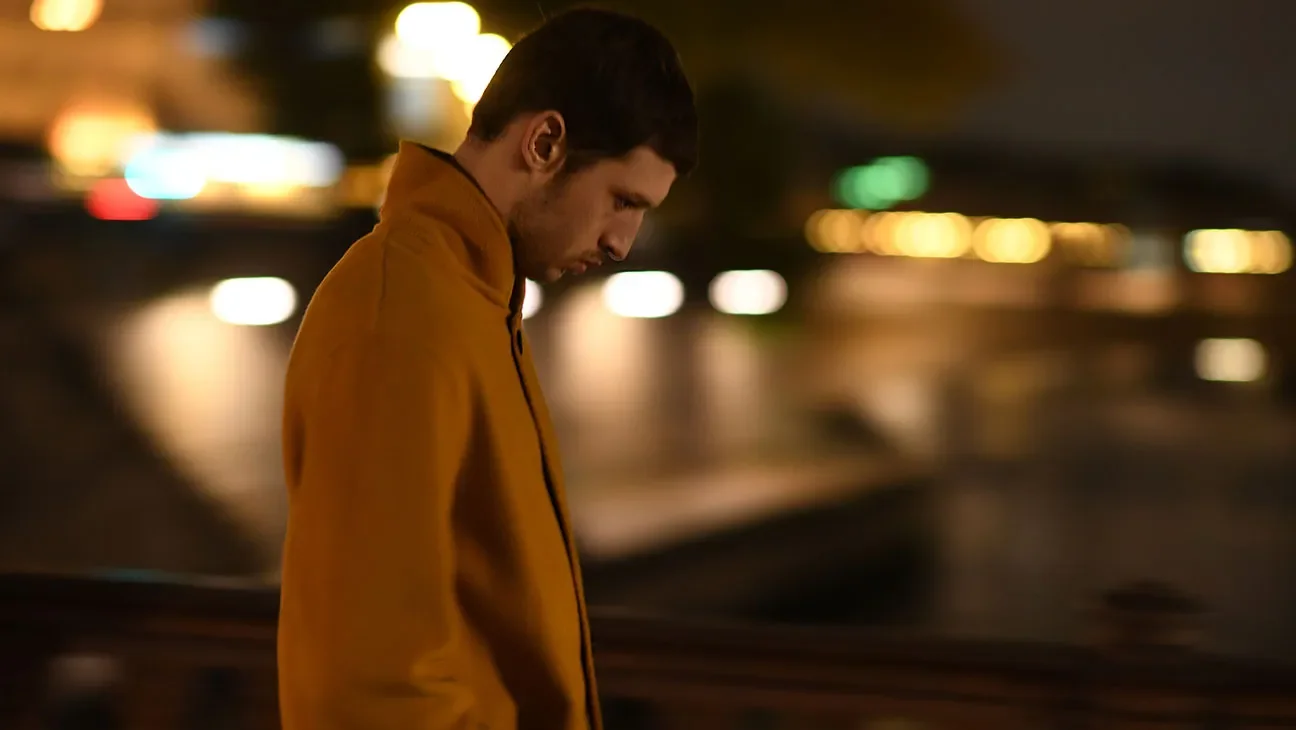
Synonyms, 2019, Nadav Lapid
Both Daiga and Yoav are radically unrooted. Both arrive in Paris seeking rebirth, and both see their expectations crushed. Yet their endings diverge profoundly. Daiga leaves Paris as a winner. Yoav, by contrast, remains before a closed door. He has failed to become French, yet he has also abandoned the identity he wished to escape. Standing between two worlds, with all his stories, unrooted and not connected with anyone in the whole world. 0th arrondissement.
