“With Less, You Can Make a Party”
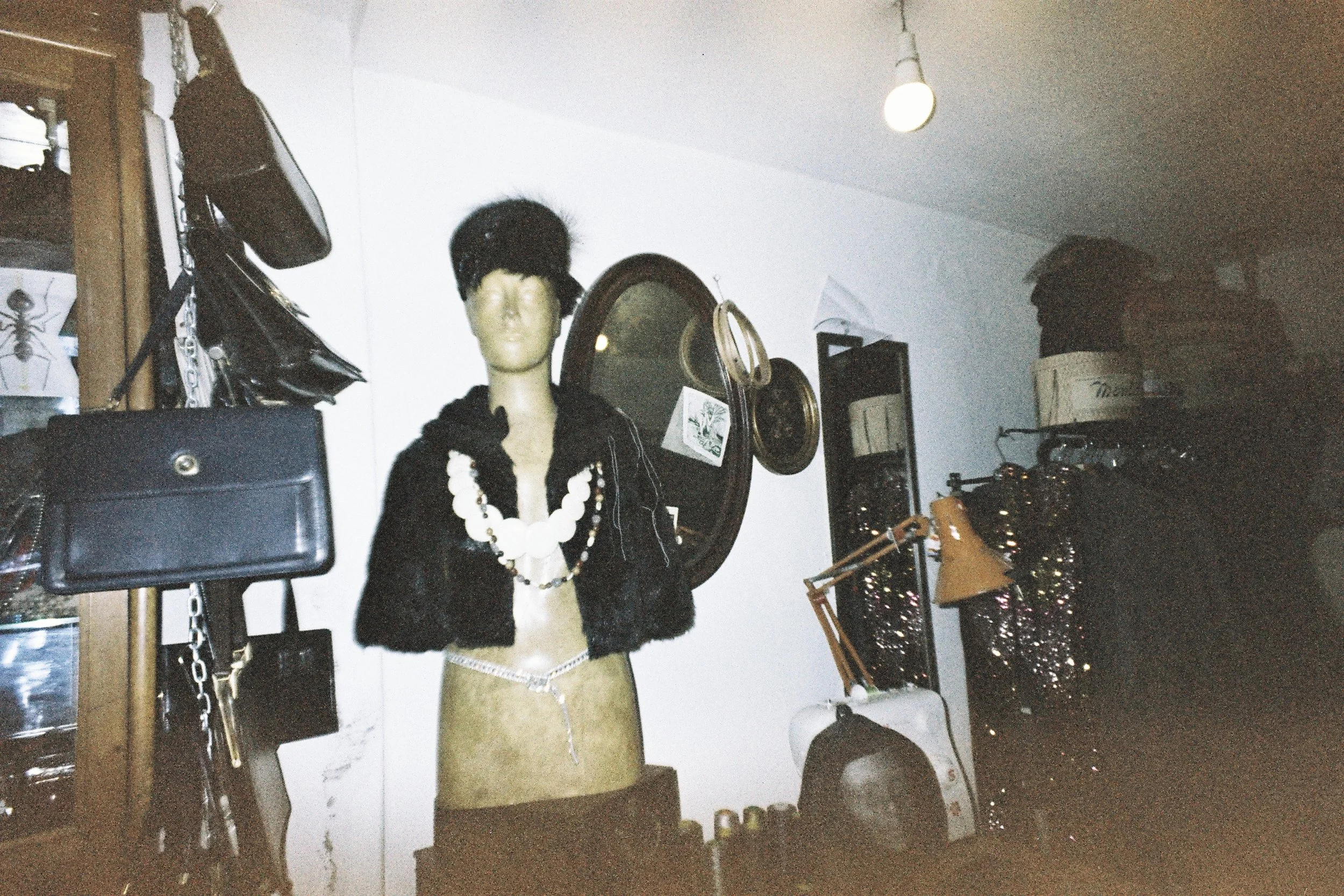
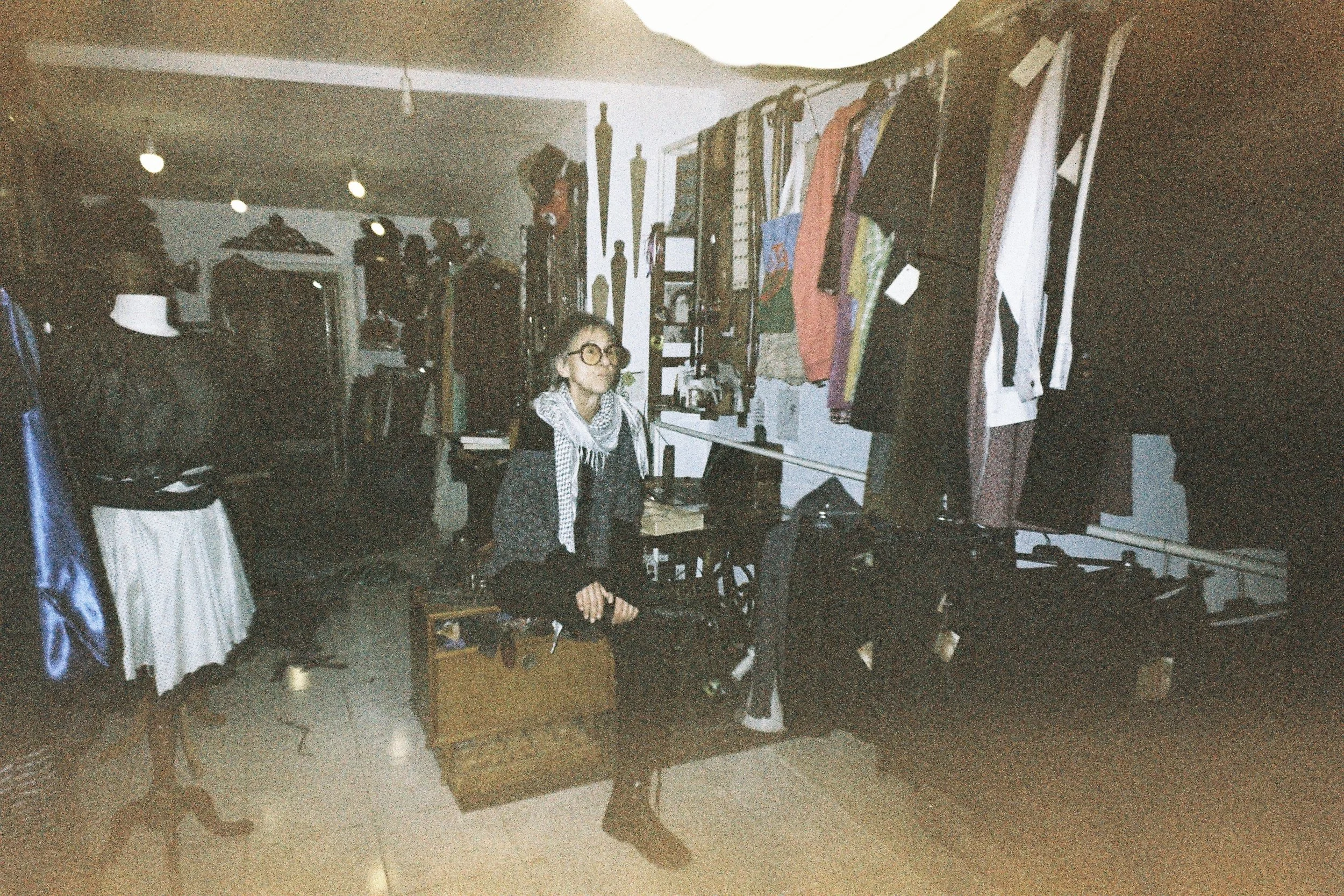
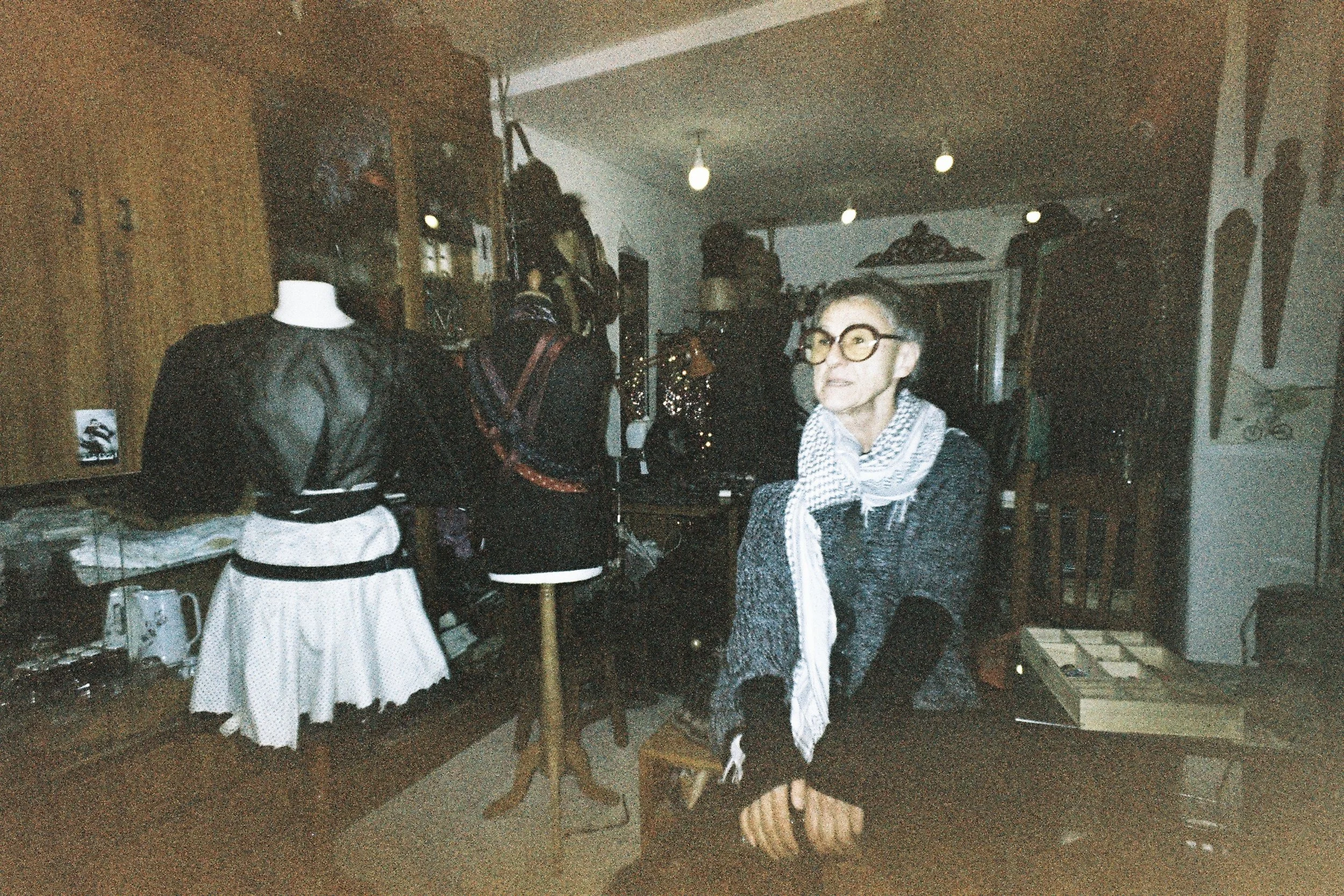
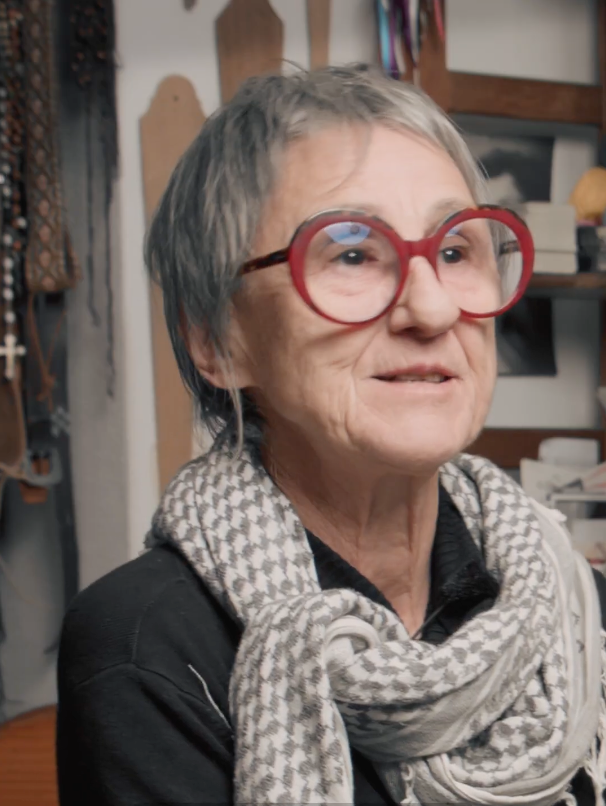
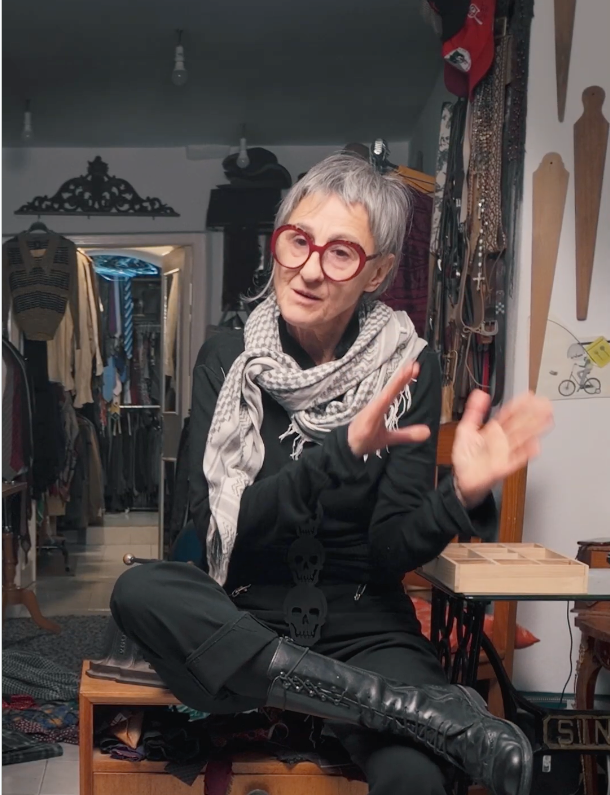
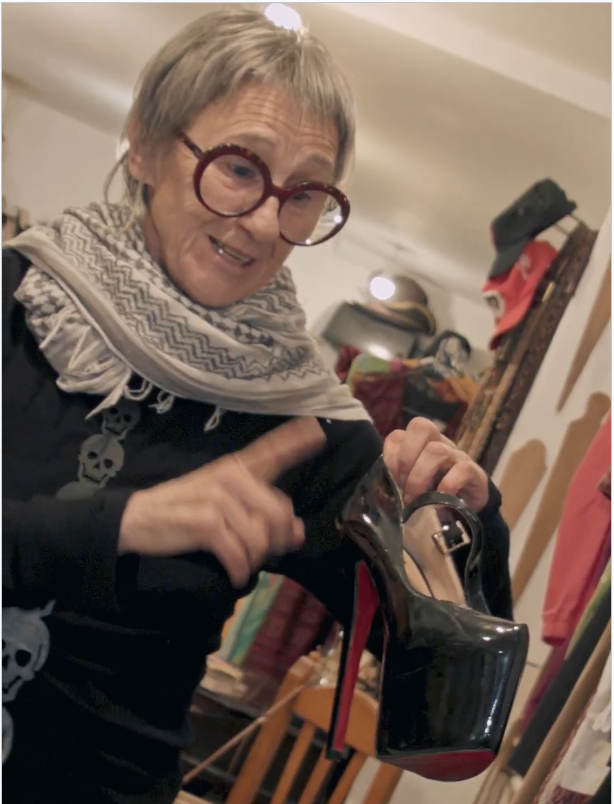
Marisa Carboni, who owns a wardrobe and clothes shop in the old centre of Lisbon, is a costume designer who worked with Terry Gilliam, an activist, and someone who can turn a broken umbrella into a dress. W&T filmed Marisa’s shop and had a nice chat about local markets, activism, and how you can make a great jacket using just a few old ties.
W&T: Could you share what was your journey? How did you finally settle here?
Marisa: I was born and raised in Brazil. I worked with costumes for cinema and theatre there until I was about 40, when I decided to go to Rome to work in cinema. My parents were Italian, so I have a double passport. That is why I chose to move and live and work with another international production. I lived in Rome for eight years. After that, I decided to come to Lisbon, Portugal, to explore the film and production scene here. I have been living here for about 20 years now.
W&T: What differences do you see between working in the industry in Brazil, in Italy and here in Portugal?
Marisa: The way of working is different, you know, and the language, of course. For me, it's nice to experience all these differences. There is no better or worse. I like working here, in Lisbon. First, I moved here because in the 2000s, Berlusconi was in charge in Italy and Italian cinema and culture did not get any support from the government. That is why I decided to come and check Portugal and see in person how it is here. Then I decided to stay here forever, you know, because I really like it here. I found my place, where I belong and want to be.
W&T:How have you started with activism?
Marisa: I'm queer, an immigrant, and have always been feminist. I always have groups to talk to, a very wide network: in Brazil, in Rome, and here. I decided to open my own wardrobe with costumes, my private collection that I use for shooting or for renting to theatre or cinema professionals, to support artists, women, trans women, and just local people who have weddings or need some special outfits. By locals, I mean people who live here; I don’t care if they are Portuguese. This is also how I got to know who lives here, who my neighbours are, and to be a place for women who need help; I wanted to be a safe, welcoming place. I don't want to be a tourist shop, just open and waiting for tourists. Touristification and gentrification are happening in Portugal, in Lisbon; I don't want to be part of that. So, I’m always learning how to be anti-capitalist, feminist, anti-racist and also how to sell and survive, you know, pay my taxes and rent.
People stay at home with their privileges, thinking they are safe, but they are not. I hate politics, but now everything is political. You are here talking to me. That is political. If I agree to talk with you and invite you to my place, that is political. Today we can no longer say “I'm neutral.” That no longer exists. Silence is killing people.
I'm having fun with the manifestation of my activism. I have fun holding my signs and flags outside. You know, I have fun looking at people when they start window shopping here, then see my things, all these books. And when they see the lesbian book at the window, some of them come in, very welcome, and some just run away scared.
W&T: Your books are doing face control.
Marisa: Certainly. I love the cover. These costumes are very sexy and even more than sexy; they are through.
W&T:Way to be sustainable is a part of your activism, right?
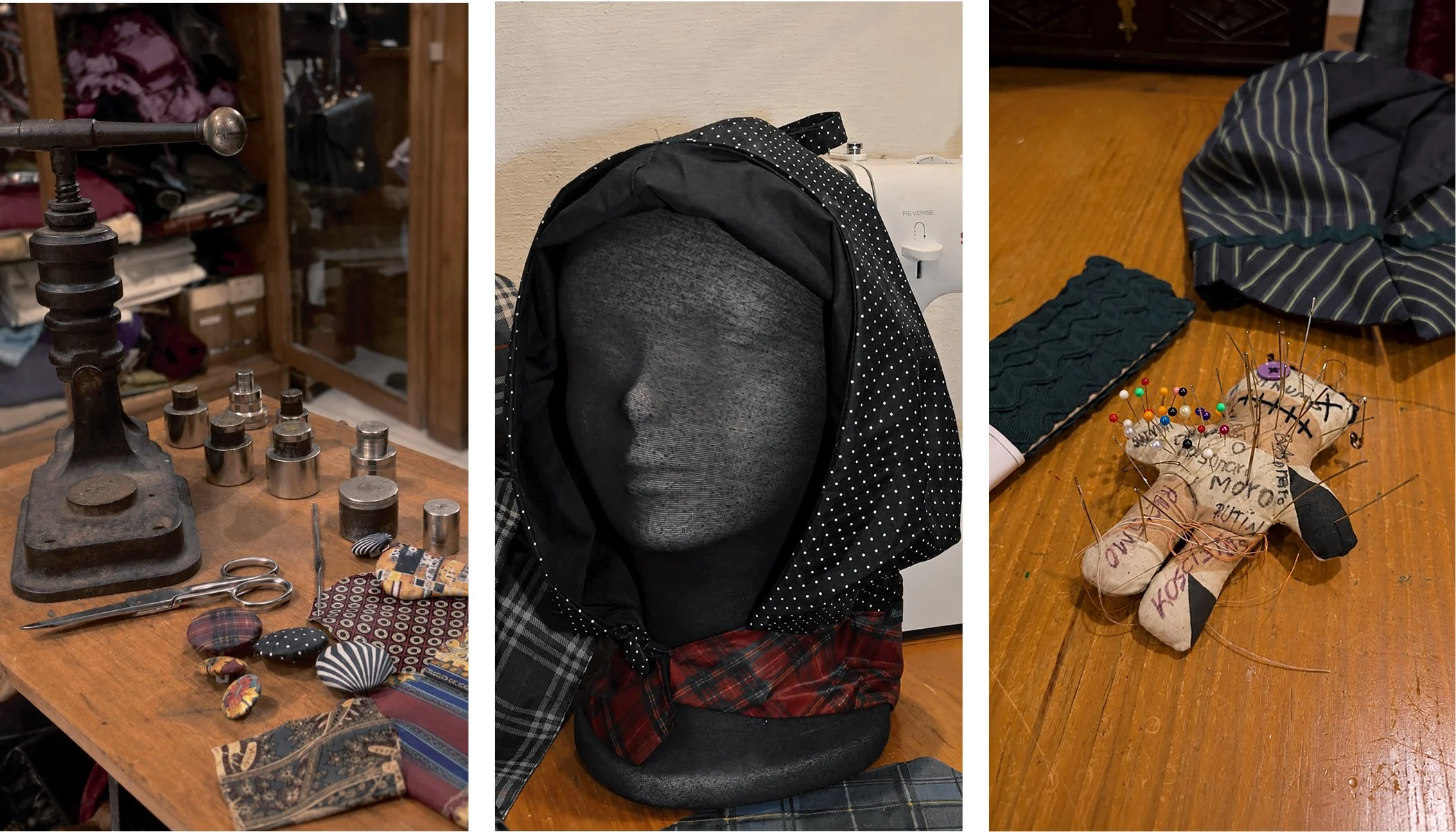
Marisa: You're right. I don't use things made in places where workers are paid unfairly. I try to recycle things, work with second-hand clothes that I used to give my personal touch or some change. And of course, I go to flea markets. Flea markets are my second home; I know everyone there. When I make costumes for movies, I always find special things, fabrics, buttons, and materials. I always recycle and reuse. The broken umbrellas I find on the street—I make clothes from them. I like mixing patterns and changing what things are used for, like turning ties into jackets.
I have a very good relationship with old people who live here. They come here to sell their stuff. For example, they have ties of husbands who died — ladies come here to sell them, exchange or donate. When they come here, we often become friends. And then I try to give another life to them, their life.
And being organic, you know, is very important. I've been a vegetarian since 1985, and now I don't even remember why. I just want to work with pre-loved clothes, pre-loved umbrellas to give them another life. And that's it. Today, a girl came to give some fabrics. I will see if I want to share them with someone who needs that kind of material. Or I know who could use it.
W&T: Clothes you're creating are a part of your activism. But what do you think about working in cinema? Is this a part of your ideas as well?
Marisa: Nothing is separate. I don't want to be trapped by someone else's rules, especially those of the patriarchy. Not anymore. You know, I'm not scared anymore. Of course, I have a lot of privileges. That’s why I can own my spot and have all these flags outside because I have privilege. Otherwise, people would come here and cause trouble or say something. The Italian passport saved my life and gave me these advantages.
But I know many people can’t do this because they depend on the money or have children. I try to stay true to my values. If someone says or does something fascist or racist during a film production, I will respond. It doesn’t matter who they are; it could be a director or anyone else. I want to notice all injustice and do something about it or just stand with people. That’s what I’m trying to do.
W&T: Tell us about your favourite experience in cinema.
Marisa: All movies, especially epic ones, have something special. The Mysterious de Lisboa was the first movie I made here in 2004 or 2005; I don't remember exactly. It was with Raúl Ruiz; he has passed away now. But he was a genius, just fantastic. He was from Latin America, Chile. He came as a director to work on this Portuguese production, and it was great. The story is about Portugal and Brazil. Brazil was colonised and then had more or less the same habits and clothes.
The next one is Giacomo Variations, about Giacomo Casanova. It was a German production with Fanny Ardant, a French actress, and John Malkovich. I worked with John Malkovich two times. Once in a Portuguese production called Lines of Wellington, about Napoleon's third time and his invasion of Portugal. There is a scene with John Malkovich where he doesn't say a word, just a look, just an inspection. I was there watching because he was a very good actor. I don't know about today. Even Giacomo Variations was great, but he was older, and his way of acting changed a bit. Also, I can mention The Man Who Killed Don Quichotte. I worked there when they were filming here in Portugal, and it was very fun to see Terry Gilliam. I don't have any idols, but it's nice to see someone you liked before. It was fantastic to work with him.
W&T: How many costumes do you mention were needed to prepare for the Don Quixote shot?
Marissa: More than 500 extras.
W&T: What was the most challenging?
Marissa: When it's history, you have to find everything, even the buttons and the exact fabric, and it's harder than fantasy. In fantasy, you can change anything; historical accuracy does not matter. It's beautiful and freeing. For historical costumes, it's a challenge because you have to find exactly what you need. You have to go to the wardrobes in Portugal, you know. Madrid has a very good wardrobe and is big; maybe you will find the needed piece there. Austria, Prague, and London too, especially for jewellery, and you have to travel to find them.
W&T: You do a lot of research when you're doing historical films, don’t you?
Marissa: We have to do a lot of research with books. The older the production, the more documents we need to find and the more people we have to talk to. But even if it's historical, you have to be creative. I used to ask the actresses and actors what they wanted. And if I can understand what they want, you know, to change something, I do as much as I can, you know, but yeah, if you can imagine. You need to picture it and draw, paint, and draw and mix materials.
I worked on a short movie called Talking About Béla Bartók, a musician from Budapest. The director came to Lisbon once at a party. This movie was very hard because I had a very, very small budget. I had to be really creative, doing things—I found some fabric at the flea market, then I put it together, made some skirts and blouses. Not from that time, I made some changes. But I work really well with this kind of challenge, because it is part of where I come from. In Brazil, with less, you can make a party.
You know, this helps to be creative. When you have a lot of money, it's easy to work, and it’s great when you do it and pay people well. But I always try to help artists who need support. I'm used to helping those people who don't have money, and even with no money, we find a way to do something nice.
W&T: What are the most special things you have right now in the wardrobe here?
Marissa: Oh, many. Here, for example, a lot of small jewellery. This is from the 50s; I first found it at the flea market. But I found the matching necklace earlier. Then, much later, I found the brush from the same set. It was like a miracle. You can see that they belong to each other.
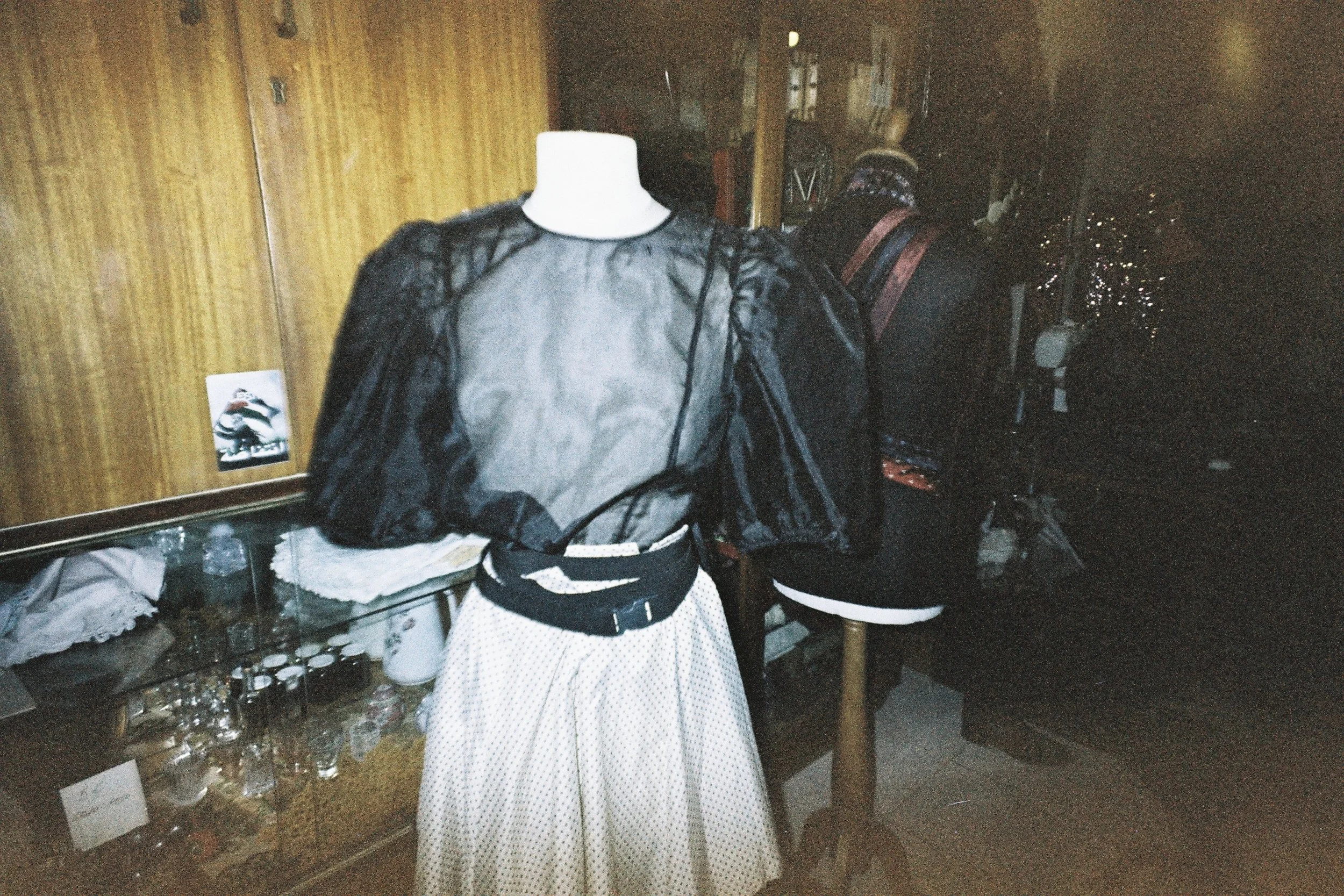
This dress is made from an umbrella that I picked up on the street. I saw a man passing by with this umbrella; it was totally broken cause it was raining a lot and very windy. And then I thought, this man would definitely throw away this umbrella, and that's it, so I followed him. And he threw it away, and I took it from the bin.
W&T: When you saw the umbrella, you already knew that it would be a dress?
Marissa: No, I just took it to decide later. The first idea was to take it and then make something like this. This dress is made from an umbrella. This one is from an umbrella too. I have a machine to decorate buttons. It helps me add a personal touch to clothes I find, fix, and resell. It's a fantastic machine. I'm so happy to have it. A friend of mine sells antiques; I found it at the flea market and gave it to me.
Look at this one, it’s made just of lace (*showing the old lace dress that is starting to fall apart). I want to use it in a performance, the last one for the dress—where the dress will destroy itself. On stage, because it’s falling apart. I want to do this tribute because it won’t last, you see. This dress is full of meaning.
W&T: Have you already chosen a performer?
Marissa: No. I don’t have a performer yet, but I want to do something because the dress will disappear and we don’t know what will happen. It’s a great metaphor because it’s too fragile to survive in this world.
